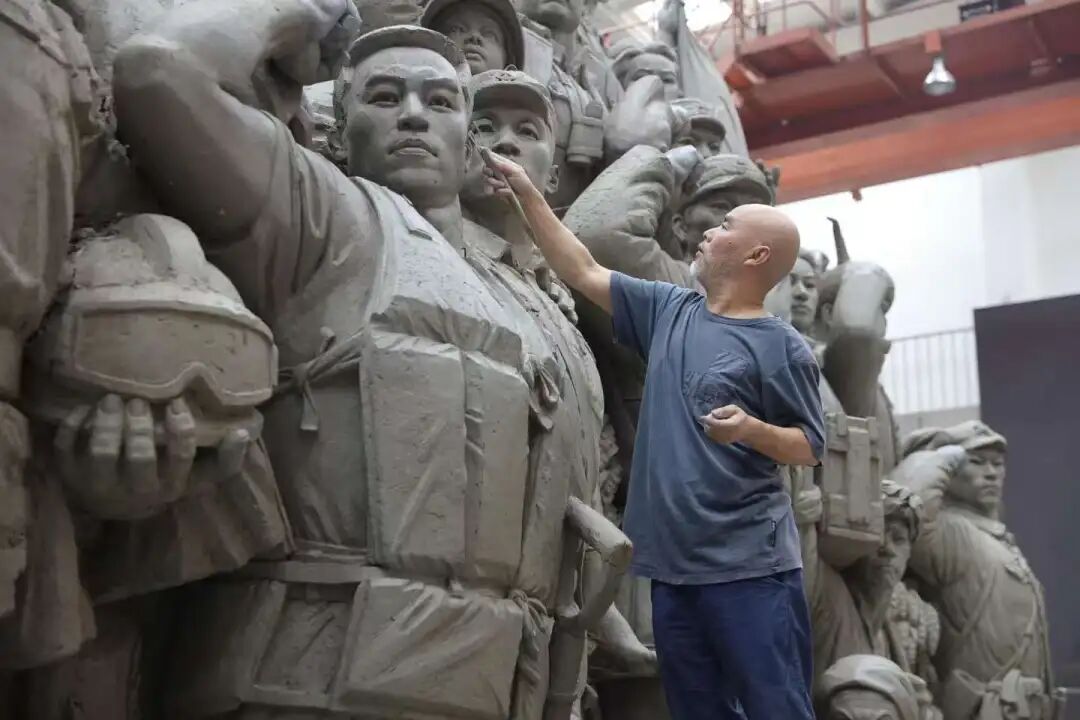
吕品昌
“景德镇国际陶艺双年展”策划者
国家社科基金艺术学重大项目首席专家
中国美术家协会公共艺术委员会主任
江西省美术家协会主席
景德镇陶瓷大学、中央美术学院教授、博士生导师
采访手记:
吕品昌,陶瓷“造山运动”的发起者,与他的对话,远不止于一个展览的诞生,直指时代最迫切的叩问:
一个陶瓷大国,如何在当代语境中重构核心文化符号的国际话语权?
“景德镇国际陶艺双年展”正是这场使命的核心支点。它既是“请进来”的国际交流舞台,更承载着建构中国当代陶瓷美学方向、理论框架与价值标准的深层诉求。从“创作者”到“引领者”,这群亲历改革开放的陶艺家,以集体自觉推动中国陶瓷文化建设,让陶瓷成为当代中国精神的重要表达载体。
在民族文化复兴的宏大叙事中,“双年展”是传统活化的平台、学术引领的引擎,更是中国与世界陶瓷对话的文化纽带。这场以瓷为媒的“造山运动”,正为世界构建可持续、富生命力的文化范式,让中国陶瓷文化以当代、学术、国际化的语汇,赢得世界的倾听与敬重。
Q:于伶娜
A:吕品昌
Q:作为一位长期深耕于陶瓷艺术领域的学者与艺术家,你已在中央美术学院拥有令人尊敬的地位与影响力。2020年,为什么会选择离开央美,来到景德镇陶瓷大学主持行政工作,并发起首届“景德镇国际陶艺双年展”?从一位成就斐然的雕塑家,到为中国陶瓷“立言”的“造山运动”的发起者,这背后是否存在某种更强烈的使命感?你作出这一选择的核心驱动力是什么?
A:这确实是一个需要勇气和自我说服的决定。近花甲之年的我,已经是很多人看来准备赋闲退休、享受安逸生活的年纪,恰在此时江西省组来央美商调人才,时任中央美术学院院长范迪安先生同我谈话并对我说:人生短暂,若能在拥有一定资源和话语权时,实现一些事业上未尽的理想,为社会多做一点贡献,便是在“大我”和“小我”之间做出了更有意义的选择。他的话对我内心触动很大,最终,在安逸稳定的现有生活和追求更大社会价值之间,我选择了后者。
之前我一直有一丝的困惑和遗憾,明明还有两年就可享受退休生活了,为什么我总感觉人生还缺失些什么?我清楚这种缺失,并不是从个人角度生发的,而是针对我所热爱的艺术事业。
在中央美术学院工作的25年,让我打开了视野,见证和参与了许多重要的国际、国内学术活动,也观察到中国陶瓷文化在当代语境中的位置与落差。中国是陶瓷大国,有着最辉煌的历史和最丰厚的资源。但我却看到,我们的艺术家要远赴海外去争取和参与更多国际展览活动。为什么在我们的土地上,没有一个能吸引世界前来交流的、持续性或者说由我们制订规则的学术平台?这种文化上的不甘心早已埋在心里,只是需要外力推动来确认这个冒险决定的合理性。我意识到,如果能拥有机会和资源,或许能尝试改变这个局面,搭建起那个应该有但仍然缺失的舞台,这成为了我内心一个强烈的动力。
Q:我想这种驱动力与你们这代人对中国文化建设的情怀密切相关,60后一代,见证并参与了中国现当代陶瓷文化建设的关键40年,舞台的缺失、话语权的缺失,让这一代艺术家有着深刻的使命感和集体自觉,“景德镇国际陶艺双年展”就是你在有能力改变时,作出的回应?
A:是的,这不是个人层面的喜好或抱负,而是一种肩负历史责任的集体自觉,也是一种陶瓷文化情怀的落地。
我们这一代人,经历了陶瓷行业数十年的沉浮与变迁,内心有一种“不甘心”——不甘心只做场上的“运动员”,永远按照既有的规则和话语体系去参与;我们渴望也能成为“建设者”甚至“规则制定者”,为中国陶瓷在当代世界文化版图中,争取应有的评价权和话语权。这是一种融汇了家国情怀、行业使命与陶瓷文化复兴理想的深层情感。
作为伴随中国改革开放历程成长起来的一代人,我们拥有一个独特的“四十年观察视角”。我们不仅埋头创作,更成为这段宏大历史的见证者、参与者和思考者。我们观察到,中国陶瓷在产能、技艺和历史资源上是“富有的”,但在当代文化表达和国际学术话语权上,却常常是“失语的”。
现在,正是基于这种长期的观察与反思,我们认为到了必须“发出自己声音”的时候——即从过去的“被动参与”转向“主动建构”,去梳理、阐释并建立一套属于中国当代陶瓷的、能与世界对话的新话语体系和文化叙事。
Q:那么,我们探讨当代陶瓷文化建设的根本立足点和更高目标是什么?
A:最直接的立足点,是解决“中国现当代陶瓷建设”本身的核心问题:它的美学方向、理论框架、教育体系和价值标准。但不能止步于此,必须将其提升到更高的文化维度。在“中国现当代文化建设”这个宏大工程中,陶瓷应该扮演什么角色?它能否超越“传统工艺美术”的固有标签,成为表达当代中国精神、哲学与审美的重要载体?我们的讨论和工作,必须置于这个高度之上,思考陶瓷如何为整体性的民族文化复兴提供独特力量。
Q:“景德镇国际陶艺双年展”在其中发挥了哪些重要作用?
A:“双年展”不仅是一个艺术交流活动,更是一个文化象征和战略支点。它象征着一个具有文化投射力的中国陶瓷艺术国际化、学术性、文化传播和可持续发展舞台的建立。同时,它也是一个推动学校整体工作、凝聚各方力量、服务景德镇国家陶瓷文化传承创新试验区建设的战略支点和重要抓手。
我想通过它证明,我们不仅能“走出去”,更能以主人的姿态“请进来”,将景德镇重新置于世界陶瓷对话的中心。这是我给这份新工作的“破题”之作,也是我对自己人生承诺的郑重兑现。
通过“双年展”我们守住陶瓷文化基因,搭建“传统活化与当代表达”平台;坚持学术驱动,锚定前沿议题引领创作趋势;赋能城市发展,将“双年展”打造成带动文旅、产业的文化IP。
这一切的背后,是一份自觉的使命,希望在我力所能及时,通过这样一个平台,真正为中国的陶瓷艺术传承、创新与国际文化传播尽一份力。

Q:“双年展”在起步阶段就确立了较高的文化与学术定位,并在首届获得了国际层面的认可。你认为,它是如何在较短时间内建立起国际影响力的?
A:在此之前,我参与过一些国际陶艺展的评审,特别是近些年来,国际上的一些陶艺“双年展”规模在缩小,无论是展陈空间、作品数量还是展品尺度,都显得较为局限,影响力和辐射范围都比较有限。而“景德镇国际陶艺双年展”则有较为理想而专业的展陈空间,因此,“双年展”不仅能在入选数量上,而且可以在体量上实现更大的自由呈现,每件作品都得到应有的尊重,同时,也展现了中国举办国际大型学术展览的负责任态度与格局。进入展厅,看到如此丰富而高品质的作品时,包括国际陶艺学会(IAC)在内的各方专业人士,都非常认可“景德镇国际陶瓷艺术双年展”的学术水准与展览品质。
可以说,我们的起点很高,始终紧扣文化与学术高度和致力于打造一个真正被业界认可的平台。
一个大型展览是需要巨大的投入和支持的,其中最重要的就是展厅改造。一个国际化的展览平台,必须有足够好的展厅作为支撑,2021年新春,学校立刻着手推动这座美术馆的基础改造工程,这个过程确实克服了不少困难,尤其是筹集资金和时间上的压力。最终,这座面积约三万平方米的美术馆在一年内完成了装修,为首届“双年展”的成功举办奠定了坚实的基础。
第一届“双年展”的筹备工作正值疫情时期,各项工作推进实属不易。然而整个过程却出乎意料地顺利——无论是作品征集、初评、复评还是最终的开幕仪式,出奇的顺畅,仿佛像被一种无形的力量所推动,恰到好处。
回首这段历程,我深感驱动自己前行的,是一份内在的责任与使命。我深知:是这份使命和责任让我来到景德镇,去推动一项具有多重意义的事业。它不仅助力景德镇国家陶瓷文化传承创新试验区建设和景德镇陶瓷大学的学科建设、人材培养,更关乎中国陶瓷文化的平台搭建和国际传播。
Q:在构建“双年展”的学术影响力和公信力时,是否曾遇到过外界的误解或留下遗憾?你如何看待这些声音?
A:确实有过,不同认知体系带来的观念差异,以及评审机制本身存在的客观限制。
传统手工艺领域部分同仁对前沿观念性作品难免不解,这是工艺美术与当代学术性陶瓷艺术的体系差异,很正常。还有国际陶艺学会个别委员曾关切“女性评委比例”少的问题,其实这都是误解,组委会已经非常关注并切实体现了对女性评委的重视。
真正的遗憾,是评审机制的局限性。为了公平公正,我们和国内很多大展一样,依靠评委票数决定结果,但艺术的优劣从来不能完全用票数定义——一些极具开创性、却不是“最大公约数”的作品,容易落选。
国际上的重要奖项,常会有深度讨论环节凝聚共识,但在国内,引入讨论极易被误解为“导向”。为了项目的公信力和顺利推进,我们只能维持现行机制。
Q:从“瓷的精神”到“瓷的旅程”再到“瓷的未来”,“双年展”发生了哪些关键变化?改变了什么?
A:我最大的感受是,它已从一个填补空白的“构想”,成长为一个真正推动城市与行业变革的“现实引擎”。
“双年展”从“立品牌”到“塑生态”,从“本体探索”到“边界拓展”,从“国际亮相”到“深度参与”,完成了自身发展的关键演进。
从“立品牌”到“塑生态”:首届“瓷的精神”的核心任务是填补中国陶瓷国际学术品牌大展的空白,建立起一个高标准的平台。第二届“瓷的旅程”则更注重平台的活态与开放性,促进了跨文化对话和资源汇聚,使展览本身成为一个持续生长、充满碰撞的“动态场域”。
从“本体探索”到“边界拓展”:策展思路从聚焦陶瓷艺术的本质精神,延伸到更广阔的材料、技术与观念旅程,推动了“守魂破形”的当代语言建构,即坚守陶瓷文化内核,大胆打破传统形式边界。
从“国际亮相”到“深度参与”:吸引了更多国际顶尖艺术家与机构(如IAC)的实质性参与和认可,国际对话从“引入展示”深化为“共同创作与探讨”,青年艺术家的参与度也显著提高。
“双年展”带来的改变体现在三方面:对景德镇城市而言,升级了文化定位、活化了城市生态、提升了市民审美;对从艺者与产业而言,也倒逼传统产业思维升级、催生青年工作室新业态、提供国际前沿学习平台;对于学术话语权则改变了中国缺乏自主学术品牌的状态,引领创作新趋势。
总而言之,“双年展”不仅立住了品牌,更已成为一个驱动文化、产业与人才生态发生深刻化学反应的催化剂。
Q:你曾强调品牌打造需要“久久为功”,如今走到第三届,为了品牌的可持续发展,当前最需要巩固的核心是什么?
A:为了这一品牌的可持续发展,当前及未来最需要巩固的核心在于:坚守学术高度,保持开放包容。
坚守学术核心,必须始终坚持高站位的学术追求,确保展览的前沿性、思想性与专业性,这是品牌赢得持久尊重的根本。秉持开放心态,在掌握一定话语权、拿到全球陶瓷文化“麦克风”的同时,必须警惕固步自封;要主动容纳世界不同地域、文化的多元艺术表达,吸纳全球的优秀成果。
品牌的理想状态,在于找到“传统与现代”、“本土与国际”之间的黄金平衡点。以当代学术和产业逻辑激活传统;又以开放格局实现双向赋能,最终实现“美美与共、共同成长”,只有这样,品牌才能行稳致远,真正成为具有全球影响力的文化平台。
Q:“双年展”特意调整会期,与2026年第52届国际陶艺大会同期举行。你期望这两大盛会并置,对提升中国陶瓷在世界的话语权有何战略意义?
A:这次主动调整展期,是一次把握历史性机遇的战略共振,旨在借助国际陶艺大会的“东风”,将“双年展”的影响力推向新高。
两大盛会并置,将形成强大的协同效应。“双年展”将以高质量的展览为大会营造浓厚的学术与艺术氛围,2026世界陶艺大会(IAC大会)则为“双年展”带来最核心、最广泛的国际专业观众,彼此赋能,共同将中国陶瓷文化推向世界关注的焦点,吸引更深度的国际关注与讨论。
这一时机选择具有不可复制的战略价值。在如此权威的国际同行聚会中隆重呈现,本身就是对“双年展”学术地位与世界级品质的一次强力认证。它将向全球陶瓷艺术界清晰表明,中国不仅有能力主办重大国际活动,更已建立起一个被主流学术界认可的高端自主平台。
Q:2026年“双年展”的主题为“瓷的未来”。在你看来,关于“未来”的讨论,最应聚焦哪些维度?
A:关于“瓷的未来”的讨论,是一场关于陶瓷艺术新可能性的多元探索。它应该聚焦以下几个相互关联的维度:一是材料的变革与新语言。未来可能突破传统“陶土”范畴,探索与生物材料、金属、可降解物质、导电陶瓷、纳米釉料等结合,实现清洁、变色、发光乃至从静态到动态的转变。材料的革命,是催生新艺术形式的物理基础。
二是科技的融合与活化。数字时代的技术融合是不可避免的趋势。3D打印、AI、虚拟烧窑等技术与手工结合,不仅能实现极其复杂的造型,更能通过数字模拟预设效果,为古老的窑火技艺带来精准的“活态传承”与全新的视觉经验。
三是表达的跨界与观念深化。在表达上,未来陶瓷必将更彻底地跳出实用与观赏的二元对立。更多以装置、影像、交互艺术等跨媒介形式出现,成为艺术家探讨身份认同、科技伦理等当代议题的强观念载体,创作“有态度的观念陶艺”。
四是场景的延伸与生活融合。未来也意味着陶瓷与当下生活场景更紧密的融合。它正通过市集、文创、公共艺术等新形式,拉近与年轻一代的距离,从美术馆走入生活现场,实现艺术生态的场景延伸。
“瓷的未来”不是抛开传统的凭空创造,而是以传统的“活性”与“灵性”,去对接当下的技术、生活与思想。这是一种“守魂破形”的智慧,守住陶瓷文化的核心灵魂,大胆打破形态与疆界的束缚,在多重维度的碰撞中,开拓前所未有的新可能。
Q:可以预见,对“未来”的探索,难免引来“脱离传统”、“看不懂”的评价。如何回应这些质疑?在当代语境下,你认为守护传统最好的方式是什么?
A:你提到的“脱离传统”“看不懂”的声音,我觉得很正常。
当代陶艺与传统陶艺在本质上属于不同体系。传统陶艺侧重工艺之美与具象表达,当代陶艺是观念艺术,核心是“提出问题、激发思考”,而非给“标准答案”。艺术的价值在于打开想象,而非制定标准。“看不懂”恰恰是思考的起点。
我认为守护传统的最好方式,绝非“封存”,而是“活化”。在当代语境下,真正的守护,是守住其灵魂与精神内核,而非僵化其形式。这就是“守魂破形”的内核。
我们探索的未来,是深植于传统灵魂的新生枝芽。要让传统活在当下,长于未来,其创造性转化与创新性发展是非常重要的,通过交流、实验与跨界,推动传统实现质的演进,使其真正融入并贡献于当代文化。
Q:本届新增“国中新锐奖”并提高青年获奖比例,这一机制为全球青年陶艺家提供了哪些区别于其他国际双年展的独特机遇?
A:面对AI与智能时代对陶瓷艺术本质的追问,我们意识到未来在于青年,而青年需要被明确地鼓励和支持。
这一机制不仅提供了奖金和曝光度,更构建了一个倡导探索、拥抱跨界、并严肃思考艺术家在未来社会中角色与能力的独特生态。它让“双年展”成为一个向未来发问、并与青年一代共同寻找答案的开放性实验室。
“双年展”鼓励“破界”与多元探索,我们主动邀请那些深耕陶瓷,具有强烈时代感和未来视野的青年人,以及来自陶瓷之外、拥有不同背景的“局外人”,甚至跨学科、跨领域的创作者参与,旨在打破行业壁垒,让陶瓷在更丰富的思想与技术碰撞中,激发出意想不到的新可能。
机制背后,我们所期待的未来青年力量,其核心特质是“思变性”。在科技时代,艺术家应具备更高的审美修养、文化品位和前瞻视野,能够驾驭AI等新技术,将其转化为表达个人独特观念的工具,确保原创性始终源于个体的内心与双手。
Q:作为全球最重要的陶艺展览之一,“景德镇国际陶艺双年展”作为平台,为亚洲内部及全球陶瓷对话,搭建了哪些不可替代的桥梁?
A:近年来,外界对“双年展”的高度评价,意味着双年展已经成为全球陶瓷艺术生态中的一个关键节点。
我认为,它为亚洲内部及全球陶瓷对话搭建了文明互鉴的范式之桥,它超越了简单展示,形成了以陶瓷为载体的深度学术对话新范式。传统活化的转化之桥,它让古老的“技艺传承”升维为“当代思想表达”,为非遗注入了当代精神。技术融合的创新之桥,它让传统匠人、科技工作者与艺术家在此协同,催生根本性的演变。产学研用的协同之桥,它有效打通了学术、创作与产业的链路,形成了良性生态。公众美育的普及之桥,它以震撼的当代姿态连接高端学术与大众审美,提升了社会美育。
“景德镇国际陶艺双年展”的不可替代性在于,它是一个多向赋能、多层互动的“枢纽”,同时连接了传统与未来、亚洲与全球、学术与公众,正在深刻重塑全球陶瓷艺术的对话格局与发展生态。

Q:如果“精神”是起点,“旅程”是过程,那么对“未来”,有哪些值得期待的?同时,最大的担忧或警惕又是什么?
A:我对“未来”的期待,是实现传统基因的现代转化,促成科技与人文的深度共生。我期待看到科技与手工良性互补催生的全新视觉经验,期待陶瓷能更深入地介入社会议题,发出有力的“陶艺家声音”,也期待它与建筑、时尚等领域融合,真正融入公共生活。
我最大的担忧,是陶瓷艺术沉溺于技术炫耀或形式主义的“小情趣”,而丧失了对时代的回应能力。如果创作仅停留在玩味材料、缺乏思想深度和人文关怀,那陶瓷将永远无法进入当代文化的主流话语。我们必须警惕脱离现实、无关痛痒的创作。
陶瓷的未来,最终取决于它能否以独特的材质语言,承载深刻的思考,成为连接历史与未来的精神载体。
Q:“双年展”的征集也涵盖了国内各大传统陶瓷产区(如龙泉、醴陵、佛山等)。这不是简单的地域覆盖,你希望借此传达一种怎样的理念?
A:未来已来,陶瓷艺术的未来,必将是“有温度的技术、有思想的形式、有担当的美学”,它终将超越我们熟悉的既有形式与内涵,生长为一种新的风格与文化。
我们每一位身处景德镇及各个传统产区的创作者,都肩负着传承与创新的双重使命。传统是活态的,创新是它的本能。真正的传统教会我们的不是模仿,而是创造。陶瓷史本就是一代代人勇于回应各自时代的结果。今天,我们面对数字智能时代,更应敢于成为新文化传统的开创者。
同时,“双年展”是土壤,而非标尺。它是一个开放的实验场和共振器,旨在提出问题、激荡思想,而非给出标准答案。希望大家能在此勇敢呈现自己的探索与困惑,进行碰撞。
归根结底,最好的“传承”是让传统活在当下、活在今天的创造中……我们要以“守魂破形”的智慧,用当代的手与心,让传统保持一种活跃、生长的状态。
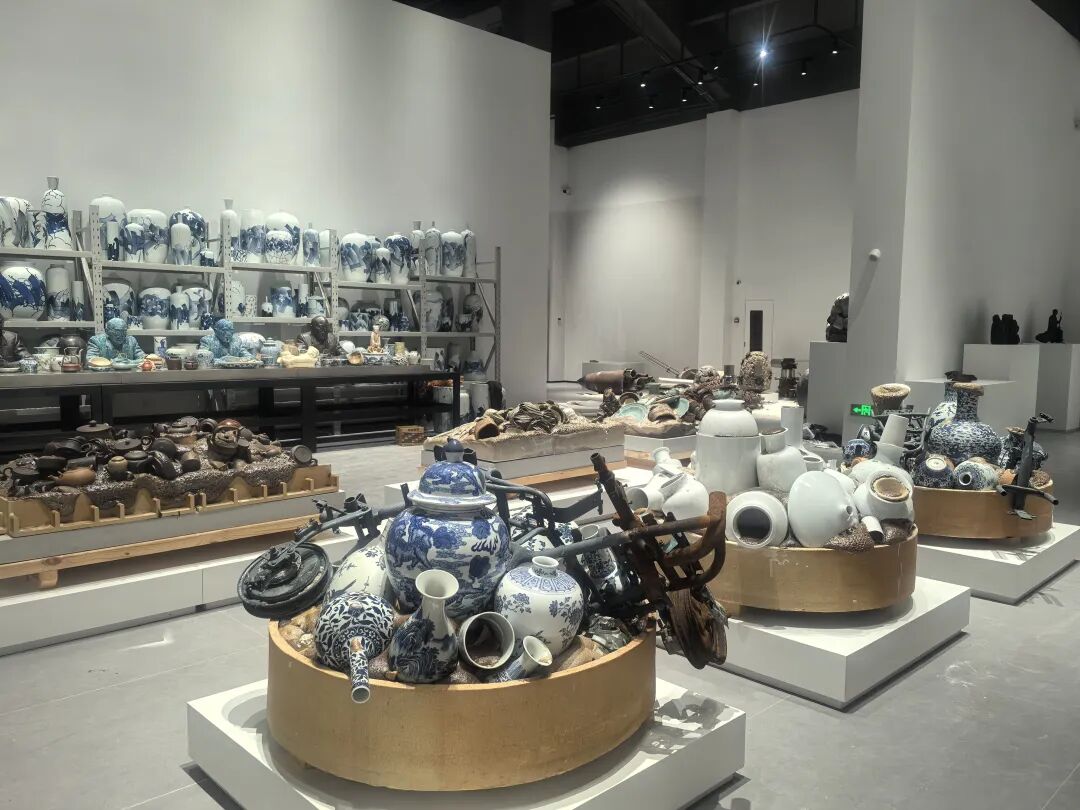
Q:放眼十年后,当人们再次谈起“景德镇国际陶瓷艺术双年展”时,你最希望听到的评价是什么?你希望它最终为世界留下什么?
A:“它塑造了中国当代陶艺在世界的新形象,也起到了改变景德镇这座城市的基因与气质的作用!”我想这可能是所有参与策划、组织和操办“双年展”的所有机构和工作人员的心声。
我希望它最终为世界留下的,不仅是一个展览,更是一种新的、多元的文化思想:一个在学术上不可或缺的全球陶瓷艺术观念试验地;一个传统灵魂与当代活力共生的“国际瓷都”可持续发展活态样本;一套能滋养艺术家并自我更新的健康生态系统;一座跨越文明、让陶瓷持续促进理解与创造的文化桥梁。
2026 “瓷的未来”景德镇国际陶艺双年展
报名截止时间:2025年12月31日
报名入口:
http://www.cjicb.com/News20251211.html
英文版
ExclusiveInterview | Lyu Pinchang: Technology with Warmth, Form with Thought
Interview Notes:
Lyu Pinchang is the initiator of the ceramic “mountain-building movement.”
A conversation with him goes far beyond the birth of a single exhibition—it directly confronts one of the most urgent questions of our time:
How can a major ceramic civilization reconstruct its core cultural symbols and international discourse power in a contemporary context?
TheJingdezhen International Ceramic Art Biennalestands at the heart of this mission. It is not only a platform for “inviting the world in,” but also bears the deeper responsibility of shaping the aesthetic direction, theoretical framework, and value system of contemporary Chinese ceramic art. From “creators” to “leaders,” this generation of ceramic artists—those who personally experienced China’s Reform and Opening-up—have collectively and consciously advanced the construction of Chinese ceramic culture, positioning ceramics as a vital medium for expressing the spirit of contemporary China.
Within the grand narrative of national cultural rejuvenation, the Biennale functions as a platform for revitalizing tradition, an engine for academic leadership, and a cultural bridge connecting China with the world through ceramics. This “mountain-building movement,” with porcelain as its medium, is helping to construct a sustainable and vital cultural paradigm for the world—allowing Chinese ceramic culture to speak in a contemporary, academic, and international language, and to earn global attention and respect.
Lyu Pinchang
Founder and Chief Planner of theJingdezhen International Ceramic Art Biennale
Chief Expert of a Major National Social Science Fund Project in Art Studies
Chair, Public Art Committee, China Artists Association
Chairman, Jiangxi Artists Association
Professor and Doctoral Supervisor, Jingdezhen Ceramic University and Central Academy of Fine Arts
Q: Yu Lingna
A: Lyu Pinchang
Q:As a scholar and artist deeply engaged in ceramic art for decades, you had already established great influence and prestige at the Central Academy of Fine Arts. Why, in 2020, did you choose to leave CAFA, come to Jingdezhen Ceramic University to take on administrative leadership, and initiate the first Jingdezhen International Ceramic Art Biennale? From a highly accomplished sculptor to the initiator of a “mountain-building movement” that seeks to articulate China’s ceramic discourse—was there a stronger sense of mission behind this decision?
A:It was indeed a decision that required courage and self-persuasion. Approaching sixty, an age when many would choose a quieter life and prepare for retirement, I was invited by Jiangxi Province to transfer from CAFA. At that time, President Fan Di’an spoke to me and said: life is short—if, while one still possesses certain resources and discursive influence, one can realize unfinished aspirations and contribute more to society, then choosing the “greater self” over the “smaller self” is a more meaningful path. His words deeply moved me. Ultimately, I chose social value over personal comfort.
For some time before that, I had felt a lingering sense of confusion and regret. With only two years left before retirement, why did I still feel something missing? I realized this sense of lack did not stem from personal ambition, but from my commitment to the field of art itself.
My twenty-five years at CAFA broadened my horizons and allowed me to participate in major international and domestic academic events. At the same time, I became acutely aware of the position—and the gap—of Chinese ceramic culture in the contemporary world. China is a great ceramic nation, with the most brilliant history and the richest resources. Yet I observed that our artists often had to travel abroad to seek international platforms. Why, on our own soil, was there no sustained, rule-setting academic platform capable of attracting the world to come and engage? This cultural unease had long been buried in my heart. When the opportunity and external impetus arrived, I realized that perhaps I could attempt to change this reality—to build a platform that should exist but was still absent. This became a powerful inner motivation.
Q:This motivation seems closely tied to your generation’s sense of responsibility toward China’s cultural construction. As artists born in the 1960s, you witnessed and participated in forty critical years of modern and contemporary ceramic development. The absence of platforms and discourse power fostered a strong collective consciousness. Was the Biennale your response when you finally had the ability to effect change?
A:Yes. This was never about personal preference orambition, but about a historically grounded collective consciousness—a sense of responsibility rooted in ceramic culture.
Our generation has lived through decades of fluctuations in the ceramic field. We share a deep sense of “unwillingness”—unwilling to remain merely “athletes” on the field, forever participating under rules defined by others. We aspired to become builders, even rule-makers, striving to reclaim rightful evaluation power and discourse authority for Chinese ceramics within the contemporary global cultural landscape. This is a profound emotion that merges national sentiment, professional responsibility, and the ideal of cultural rejuvenation.
Growing alongside China’s Reform and Opening-up, we possess a unique “forty-year observational perspective.” We are not only creators, but witnesses, participants, and thinkers. We see that while China is rich in production capacity, craftsmanship, and historical resources, it is often “voiceless” in contemporary cultural expression and international academic discourse.
Now, after long observation and reflection, we believe the time has come to speak in our own voice—to shift from passive participation to active construction, and to establish a new discourse system and cultural narrative for contemporary Chinese ceramics that can truly dialogue with the world.
Q:What, then, is the fundamental footing and higher goal of contemporary ceramic cultural construction?
A:At the most immediate level, it is about addressing the core issues of modern and contemporary Chinese ceramics: aesthetic orientation, theoretical framework, educational systems, and value standards. But we cannot stop there. We must elevate this discussion to a broader cultural dimension. Within the grand project of contemporary Chinese cultural construction, what role should ceramics play? Can it transcend the traditional label of “craft” and become a significant medium for expressing contemporary Chinese spirit, philosophy, and aesthetics? Our work must be situated at this level—thinking about how ceramics can contribute unique strength to national cultural rejuvenation.
Q:What roles does the Jingdezhen International Ceramic Art Biennale play in this process?
A:The Biennale is not merely an art event; it is a cultural symbol and a strategic fulcrum. It represents the establishment of an international, academic, communicative, and sustainable platform for Chinese ceramic art with real cultural projection. At the same time, it serves as a strategic engine for advancing the university’s overall development, uniting diverse forces, and supporting the construction of the Jingdezhen National Ceramic Culture Inheritance and Innovation Pilot Zone.
Through the Biennale, I hope to demonstrate that we can not only “go out,” but also “invite in” as hosts—repositioning Jingdezhen at the center of global ceramic dialogue. This was my opening move in this new role, and a solemn fulfillment of a personal commitment.
Through the Biennale, we safeguard ceramic cultural genes, build a platform for “revitalized tradition and contemporary expression,” adhere to academic leadership, empower urban development, and cultivate a cultural IP that integrates art, industry, and tourism. Behind all this is a conscious mission: to contribute, within my capacity, to the inheritance, innovation, and international communication of Chinese ceramic art.
Q:From its very beginning, the Biennale established a high cultural and academic positioning, and the first edition already received recognition at the international level. In your view, how did it manage to build international influence in such a relatively short period of time?
A:Prior to this, I had served as a juror for several international ceramic exhibitions. Especially in recent years, I observed that some international ceramic “biennales” have been gradually shrinking in scale. Whether in terms of exhibition space, number of works, or the physical scale of the exhibits, many have become rather constrained, with correspondingly limited influence and reach.
By contrast, theJingdezhen International Ceramic Art Biennalebenefits from ideal and professionally designed exhibition spaces. This allows the Biennale not only to accommodate a larger number of selected works, but also to offer greater freedom in scale and presentation. Each work receives the respect it deserves, while the exhibition as a whole demonstrates China’s sense of responsibility and broad vision in hosting large-scale international academic exhibitions.
Upon entering the galleries and encountering such a rich array of high-quality works, professionals from many quarters—including the International Academy of Ceramics (IAC)—have expressed strong recognition of the Biennale’s academic standards and exhibition quality.
It can be said that our starting point was very high. From the outset, we remained firmly committed to cultural depth and academic rigor, with the goal of building a platform that would be genuinely recognized by the professional field.
A major exhibition requires substantial investment and support, and among all factors, the most critical is the renovation and upgrading of exhibition venues. An international exhibition platform must be backed by exhibition spaces of sufficient quality. In the Spring Festival period of 2021, the university immediately initiated the fundamental renovation of this art museum. The process indeed involved overcoming many difficulties—especially pressures related to funding and time. Ultimately, this museum, with a total area of approximately 30,000 square meters, was fully renovated within one year, laying a solid foundation for the successful launch of the first Biennale.
The preparation of the first Biennale coincided with the pandemic, making every stage of the process particularly challenging. Yet, somewhat unexpectedly, everything progressed with remarkable smoothness—from the open call and preliminary selection, to the final review and the opening ceremony. It felt as though the entire process was being propelled by an invisible force, unfolding at just the right pace.
Looking back on this journey, I am deeply aware that what drove me forward was an inner sense of responsibility and mission. I knew very clearly that it was this mission that brought me to Jingdezhen—to advance an undertaking of multiple layers of significance. It not only contributes to the construction of the Jingdezhen National Ceramic Culture Inheritance and Innovation Pilot Zone, and to the discipline development and talent cultivation of Jingdezhen Ceramic University, but also bears directly on the building of platforms for Chinese ceramic culture and its international communication.
Q:In the process of building the Biennale’s academic influence and public credibility, did you encounter misunderstandings from the outside or experience any regrets? How do you view these voices?
A:Yes, there were indeed such moments. They mainly stemmed from differences between distinct cognitive and value systems, as well as from the inherent limitations of the evaluation mechanism itself.
Some colleagues in the traditional handicraft field find it difficult to fully understand more conceptually driven, forward-looking works. This is quite normal, as it reflects the systemic differences between arts-and-crafts traditions and contemporary academic ceramic art.
There were also concerns raised by a small number of members of the International Academy of Ceramics regarding what they perceived as a low proportion of female jurors. In fact, this was a misunderstanding—the organizing committee has placed great emphasis on gender balance and has genuinely implemented measures to ensure the participation and recognition of female jurors.
The more substantive regret lies in the limitations of the judging mechanism. In order to ensure fairness and impartiality, we—like many large exhibitions in China—determine results based on jurors’ votes. However, the value of art can never be fully defined by vote counts alone. Some highly pioneering works, which are not part of the “greatest common denominator,” are therefore more likely to be excluded.
In many major international awards, in-depth discussion sessions are used to build consensus. In the domestic context, however, introducing such discussions can easily be misunderstood as “guidance” or directional interference. In order to safeguard the Biennale’s credibility and ensure the smooth advancement of the project, we have had to maintain the existing mechanism. This is a “regret” we must accept for the sake of procedural correctness.
Q:FromThe Spirit of CeramicstoThe Journey of Ceramicsand now toThe Future of Ceramics, the themes of the Biennale seem to form a clear internal progression. How do you understand this thematic evolution?
A:This progression is by no means accidental. It reflects a path of thinking that moves from cultural self-awareness to historical consciousness, and finally toward future-oriented construction.
The Spirit of Ceramicsfocused on cultural identity—on asking who we are and what ceramics mean within Chinese civilization.The Journey of Ceramicsexpanded this inquiry into a historical and global dimension, tracing how ceramics have traveled across regions, civilizations, and time, shaping a shared human experience.The Future of Ceramicsrepresents a further step: it is no longer about looking back, but about projecting forward—about how ceramics can actively participate in shaping the future world.
This future is not limited to technological innovation. It also involves questions of values, ecology, ethics, education, and cultural imagination. What kind of future do we want ceramics to help articulate? This is the deeper question behind the theme.
Q:You have emphasized that building a strong brand requires sustained, long-term effort. Now that the Biennale has reached its third edition, what do you see as the most critical core that must be consolidated to ensure the brand’s sustainable development?
A:For the sustainable development of the Biennale as a brand, the most essential core—both now and in the future—is to uphold academic rigor while maintaining openness and inclusivity.
To safeguard the academic core means consistently adhering to high-level scholarly aspirations and ensuring the exhibition’s forward-looking vision, intellectual depth, and professional standards. This is the fundamental basis on which the brand earns lasting respect. At the same time, an open mindset is indispensable. Even as we gain a certain degree of discourse power and take hold of the “microphone” in global ceramic culture, we must remain vigilant against becoming inward-looking or complacent. It is essential to actively embrace diverse artistic expressions from different regions and cultures, and to absorb outstanding achievements from around the world.
The ideal state of a cultural brand lies in finding a golden balance betweentradition and modernity, and between the local and the international—revitalizing tradition through contemporary academic and industrial logic, while achieving two-way empowerment through an open and inclusive framework. Ultimately, this leads to a condition of“shared beauty and collective growth.”Only in this way can the brand move forward steadily and over the long term, and truly become a cultural platform with global influence.
Q:The Biennale has adjusted its schedule to coincide with the 52nd International Ceramic Congress in 2026. What strategic significance do you see in staging these two major events side by side for enhancing China’s discursive presence in global ceramic culture?
A:This proactive adjustment of the schedule represents a strategic resonance that seizes a historic opportunity. By riding the momentum of the International Ceramic Congress, we aim to elevate the Biennale’s influence to a new level.
The concurrent staging of these two major events will generate powerful synergy. The Biennale will create a rich academic and artistic atmosphere for the Congress through exhibitions of the highest quality, while the 2026 International Ceramic Congress (IAC Congress) will bring the Biennale its most core and broad-based international professional audience. Through mutual empowerment, the two platforms will together place Chinese ceramic culture at the center of global attention, attracting deeper and more sustained international engagement and discussion.
This choice of timing carriesirreproducible strategic value. To be presented with such prominence within a gathering of the world’s most authoritative international peers is, in itself, a powerful endorsement of the Biennale’s academic standing and world-class quality. It sends a clear message to the global ceramic art community that China not only has the capacity to host major international events, but has also established a high-level, self-directed platform that is fully recognized by the international academic mainstream.
Q:The theme of the 2026 Biennale isThe Future of Ceramics. In your view, which dimensions should discussions of the “future” focus on most?
A:Discussions aroundThe Future of Ceramicsconstitute a multifaceted exploration of new possibilities in ceramic art. They should focus on several interrelated dimensions.
First ismaterial transformation and the emergence of new languages. The future may move beyond the traditional category of “clay,” exploring combinations with biomaterials, metals, biodegradable substances, conductive ceramics, nano-glazes, and more—enabling ceramics to become self-cleaning, color-changing, luminous, or even to shift from static to dynamic states. A revolution in materials provides the physical foundation for the birth of new artistic forms.
Second isthe integration and activation of technology. In the digital age, technological convergence is inevitable. The integration of 3D printing, AI, virtual kiln firing, and other technologies with handcraft not only allows for extremely complex forms, but also enables effects to be preconfigured through digital simulation. This brings a precise, “living” mode of transmission to ancient kiln traditions and generates entirely new visual experiences.
Third iscross-disciplinary expression and the deepening of concepts. In terms of expression, future ceramics will move more decisively beyond the binary of utility versus aesthetic appreciation. They will increasingly appear in cross-media forms such as installation, video, and interactive art, becoming powerful conceptual vehicles through which artists address contemporary issues such as identity, technological ethics, and social change—creating ceramics that carry clear positions and ideas.
Fourth isthe expansion of contexts and integration with everyday life. The future also implies a closer integration of ceramics with contemporary life. Through new forms such as markets, cultural and creative products, and public art, ceramics are drawing closer to younger generations, moving from the museum into lived spaces and extending the scenarios of the artistic ecosystem.
The Future of Ceramicsis not about creating ex nihilo by abandoning tradition, but about drawing on the vitality and spirit of tradition to engage with contemporary technology, life, and thought. This is a form of wisdom that might be described as “preserving the soul while breaking the form”: holding fast to the core spirit of ceramic culture while boldly breaking through formal and disciplinary boundaries, opening up unprecedented possibilities through collisions across multiple dimensions.
Q:It is foreseeable that explorations of the “future” may invite criticisms such as being “detached from tradition” or “hard to understand.” How would you respond to such doubts? In a contemporary context, what do you believe is the best way to safeguard tradition?
A:I think comments such as “detached from tradition” or “hard to understand” are entirely natural.
At their core, contemporary ceramics and traditional ceramics belong to different systems. Traditional ceramics emphasize the beauty of craftsmanship and figurative expression, whereas contemporary ceramics function as conceptual art, whose essence lies inposing questions and provoking thought, rather than providing “standard answers.” The value of art is to open up imagination, not to impose norms. In this sense, “not understanding” is precisely the starting point of reflection.
In my view, the best way to safeguard tradition is by no means to “seal it away,” but toactivate it. In a contemporary context, true preservation means safeguarding its soul and spiritual core, rather than rigidly freezing its forms. This is the essence of “preserving the soul while breaking the form.”
The future we explore is a new growth that is deeply rooted in the soul of tradition. For tradition to live in the present and grow into the future, creative transformation and innovative development are essential. Through dialogue, experimentation, and cross-disciplinary engagement, tradition can be propelled toward qualitative evolution—allowing it to truly integrate into and contribute to contemporary culture.
Q:This edition introduces the new “Guozhong Emerging Artist Prize” and increases the proportion of prizes awarded to young artists. What unique opportunities does this mechanism offer to young ceramic artists worldwide, compared with other international biennales?
A:In the face of the fundamental questions that AI and the age of intelligence pose to the essence of ceramic art, we have come to realize that the future belongs to the young—and that young artists need to be explicitly encouraged and supported.
This mechanism does more than provide prize money and visibility. It builds a distinctive ecosystem that advocates exploration, embraces cross-disciplinary practice, and takes seriously the question of the artist’s role and capabilities in future society. It transforms the Biennale into an open laboratory—one that asks questions of the future and searches for answers together with the younger generation.
The Biennale encourages boundary-breaking and pluralistic exploration. We actively invite young practitioners who are deeply rooted in ceramics yet possess a strong sense of the times and a future-oriented vision, as well as “outsiders” from beyond the field of ceramics—creators from different backgrounds, including those working across disciplines and domains. The aim is to dismantle professional barriers and allow ceramics to spark unforeseen possibilities through richer collisions of ideas and technologies.
Behind this mechanism, the core quality we seek in the future strength of young artists isadaptability and a readiness for change. In a technological era, artists should possess a higher level of aesthetic discernment, cultural sensibility, and forward-looking vision. They must be able to master new technologies such as AI and transform them into tools for expressing their own distinctive ideas—ensuring that originality always springs from the individual’s inner vision and their own hands.
Q:As one of the most important ceramic exhibitions in the world, what irreplaceable bridges does the Jingdezhen International Ceramic Art Biennale build as a platform for dialogue within Asia and across the globe?
A:In recent years, the high level of recognition the Biennale has received indicates that it has become a key node within the global ceramic art ecosystem.
I believe it builds several indispensable bridges for dialogue within Asia and worldwide. It is abridge of mutual learning among civilizations, going beyond mere display to establish a new paradigm of in-depth academic dialogue with ceramics as its medium. It is a bridge of transformation through the activation of tradition, elevating ancient “craft inheritance” into “contemporary intellectual expression” and infusing intangible cultural heritage with contemporary spirit. It is a bridge of innovation through technological integration, bringing together traditional artisans, technologists, and artists to collaborate and catalyze fundamental evolution. It is a bridge of collaboration between academia, creation, industry, and application, effectively linking research, practice, and production to form a healthy ecosystem. And it is a bridge of public art education, connecting advanced scholarship with public aesthetics through a powerful contemporary presence and enhancing society’s cultural literacy.
The irreplaceability of the Jingdezhen International Ceramic Art Biennale lies in its role as a multidirectional, multilayeredhub—simultaneously linking tradition and the future, Asia and the world, scholarship and the public—profoundly reshaping the global landscape of dialogue and development in ceramic art.
Q:If “spirit” is the point of departure and “journey” the process, then what is there to look forward to in the “future”? At the same time, what are your greatest concerns or cautions?
A:What I look forward to in the future is the modern transformation of traditional genetic codes, and the deep co-existence of technology and the humanities. I hope to see entirely new visual experiences born from a healthy complementarity between technology and handcraft; to see ceramics engage more profoundly with social issues and articulate a strong “ceramic artist’s voice”; and to see it integrate with fields such as architecture and fashion, truly becoming part of public life.
My greatest concern is that ceramic art might become absorbed in technological spectacle or formalist “small pleasures,” thereby losing its capacity to respond to the realities of its time. If creation remains confined to playful experimentation with materials, lacking intellectual depth and humanistic concern, ceramics will never enter the mainstream discourse of contemporary culture. We must remain vigilant against work that is detached from reality and inconsequential.
Ultimately, the future of ceramics depends on whether it can carry profound thought through its distinctive material language and become a spiritual medium connecting history and the future.
Q:The Biennale’s open call also includes major traditional ceramic production regions across China (such as Longquan, Liling, and Foshan). This is more than simple regional coverage—what kind of idea do you hope to convey through this?
A:The future has already arrived. The future of ceramic art will be one of technology with warmth, form with thought, and aesthetics with responsibility. It will ultimately transcend the familiar forms and meanings we know today, growing into a new style and culture.
Every creator working in Jingdezhen and in the various traditional production regions bears a dual responsibility: inheritance and innovation. Tradition is living, and innovation is its instinct. What true tradition teaches us is not imitation, but creation. The history of ceramics itself is the result of generations courageously responding to the demands of their own times. Today, as we face the age of digital intelligence, we should be even more willing to become initiators of new cultural traditions.
At the same time, the Biennale issoil, not ameasuring stick. It is an open experimental field and a resonator, intended to pose questions and stir thought rather than provide standard answers. I hope everyone will have the courage to present their explorations and uncertainties here, allowing genuine encounters and collisions to occur.
Ultimately, the best form of “inheritance” is to allow tradition to live in the present—to live within today’s acts of creation. With the wisdom of “preserving the soul while breaking the form,” we must use contemporary hands and minds to keep tradition active and in a state of continual growth.
Q:Looking ten years ahead, when people speak again of the Jingdezhen International Ceramic Art Biennale, what is the evaluation you most hope to hear? What do you hope it will ultimately leave to the world?
A:“It reshaped the global image of contemporary Chinese ceramics, and helped transform the very DNA and character of the city of Jingdezhen.” I believe this is the shared aspiration of all the institutions and individuals involved in the planning, organization, and realization of the Biennale.
What I hope it will ultimately leave to the world is not merely an exhibition, but a new and plural cultural vision: an indispensable global experimental ground for ceramic art ideas; a living, sustainable model of an “international porcelain capital” where traditional spirit and contemporary vitality coexist; a healthy ecosystem that nurtures artists and continually renews itself; and a cultural bridge that transcends civilizations, allowing ceramics to continuously foster understanding and creativity.
2026 “The Future of Ceramics” Jingdezhen International Ceramic Art Biennale
Registration Deadline:December 31, 2025
Registration Portal:
http://www.cjicb.com/News20251211.html
(责任编辑:兰茜 审稿:刘欢 兰茜)