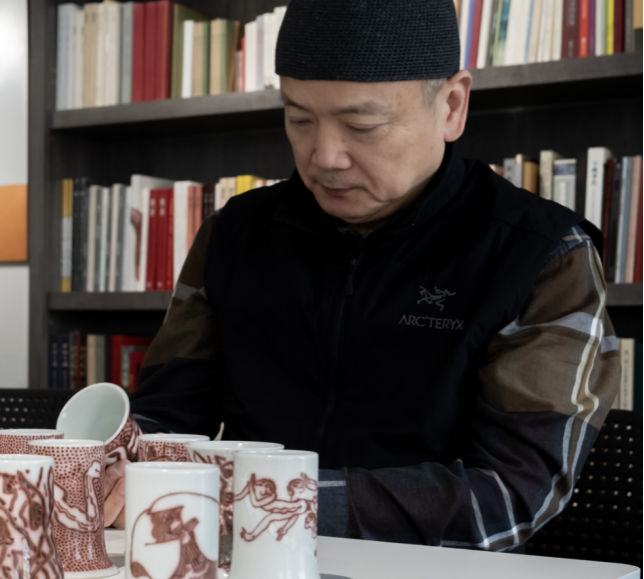
刘正
中国美术学院教授、博导
原中国美术学院党委副书记
中国美术家协会陶艺委员副主任
曾获“中国陶瓷艺术教育突出贡献奖”
采访手记:
“我们如何为世界的陶瓷艺术,做出我们这一代人的贡献?”
这个问题,像一根暗线,贯穿了刘正自1998年发起首届“中国当代青年陶艺家作品双年展”以来,整整27年的思考与实践。
从最初为陶艺家搭建交流平台,到如今成为探讨本土文化与国际视野的核心阵地,他见证了中国当代陶艺的成长与蜕变。
从面对浩瀚传统不知如何“自由创作”,到如今直面AI与全球化浪潮的冲击,27年的变迁,恰是中国当代陶艺寻找自身坐标的轨迹。
在这场对话中,我们试图厘清:在一个平台过剩、信息爆炸的时代,一个顶级的双年展究竟何为?中国的年轻陶艺家,又该如何在世界的喧嚣中,找到自己!
Q:于伶娜
A:刘正
Q:你认为景德镇国际陶艺双年展在全球处于怎样的地位,其核心价值是什么?
A:它无疑是中国乃至世界重要的陶艺双年展之一,如今已在中国当代陶艺界产生了极大影响,不管是学院派、产区从业者,还是不同年龄段的陶艺家,都能从中获得积极指引,是极具分量的交流平台。
实践证明,越是面向国际,越需要深入思考中国当代陶艺的独特定位。我们应以怎样的形态与思想,为世界陶艺的发展贡献属于这一代人的力量?这也正是本次双年展的核心目标:借助国际平台,厘清中国当代陶艺的前行路径,推动陶艺家在全球化语境中审视并构建自身的创作体系。
与日本美浓、韩国京畿道等国际知名陶艺双年展相比,我们的特色在于深耕本土文化资源,激发中国当代陶艺的创造活力,着力培育具有中国文化气质与当代视野的青年陶艺家。在以往的评审中,即便评审团涵盖众多国际评委,大家对于作品文化根脉与属性的关注始终十分突出。我们期待通过双年展这一平台,深入挖掘并展现中国文化的深厚魅力,系统培育兼具中国特色与国际表达的新一代陶艺力量。
Q:你在1998年就发起了首届中国当代青年陶艺家作品双年展,当时的初衷是什么?27年过去,双年展面临的新问题是什么?
A:当时的创作环境与现在截然不同。初衷其实很简单:为那些以陶瓷材料进行创作的艺术家,搭建一个展示与交流的平台。那时候,全国美展没有陶艺门类,轻工系统的陶瓷评比也主要面向产区产品,专注于所谓新陶艺创作语言实践的陶艺家没有展示的平台。
第一届展览条件非常艰苦,没有经费,参展艺术家甚至要自己动手刷展台。展厅是借来的,所幸是由王澍设计,现场效果十分出彩,前两届都在那里举办。面对中国深厚的陶瓷传统,许多艺术家不甘于仅仅模仿复制,都希望创作出具有个人风格的作品。我们还邀请了海峡两岸暨香港、澳门的艺术家共同参与,就这样一步步坚持下来,至今已举办了十三届。
如今,国内各类陶艺展览越来越多,例如陶大、国美、清华、山东等地均有相关展事。在这样的背景下,双年展必须“再出发”,回应时代提出的核心命题:如何吸收世界陶艺发展的积极成果,结合本土传统,激活青年陶艺家的创作力,推动他们创作出具有本土文化魅力、同时又具备当代精神的作品。
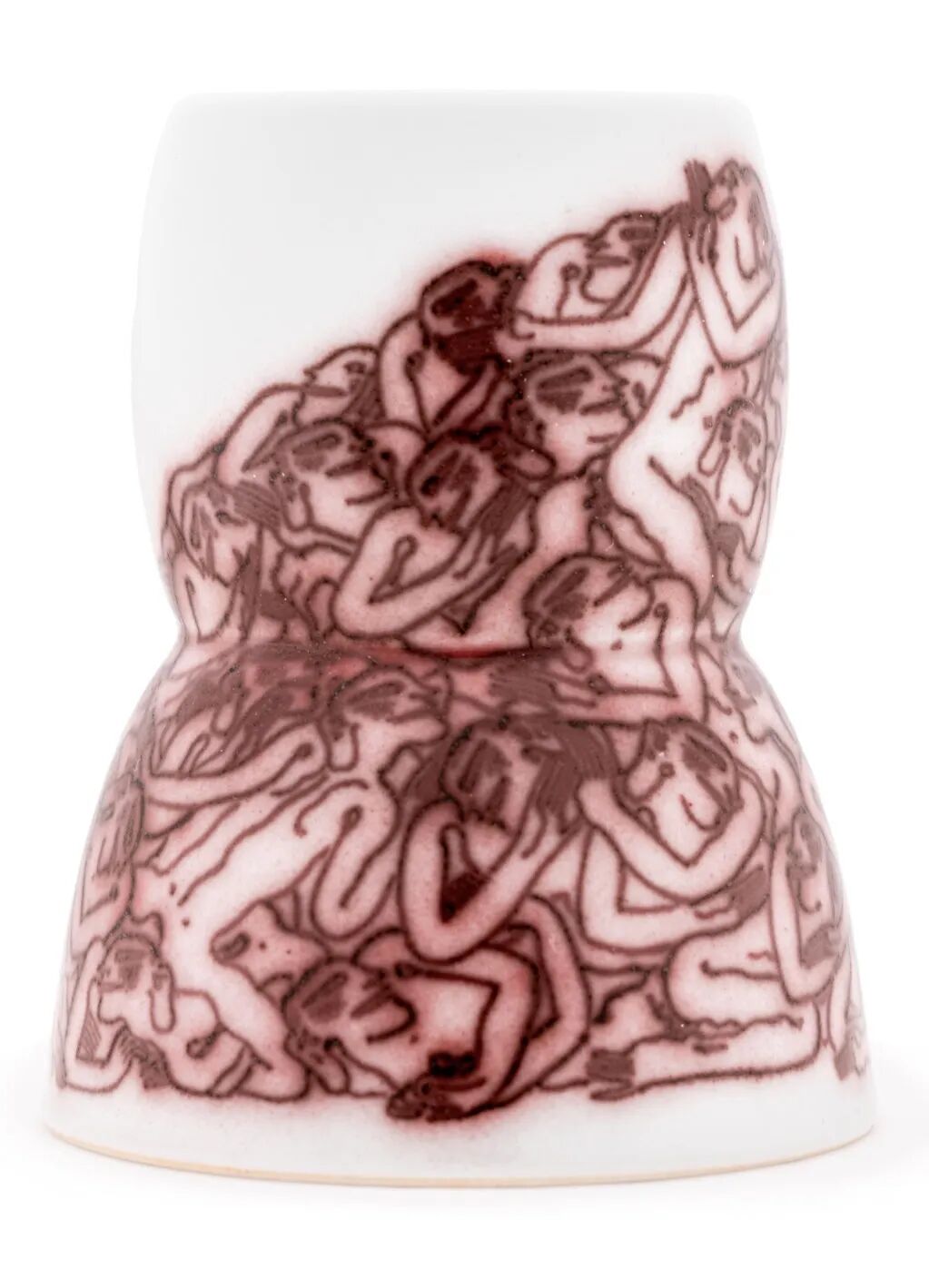
需要特别强调的是,“本土性”不应走向狭隘的民族化表达,也不能沦为表面符号的堆砌。关键在于深入理解中国文化的内核,而非仅仅进行“外衣式”的浅层呈现。随着大家对这一问题的认识不断深化,作品的表现层次与艺术质量也将不断提升。
Q:双年展由院校主办,对陶瓷艺术教育会产生哪些独特的价值与影响?
A:双年展对教育的引领作用十分关键。我们培养的是未来十年、二十年甚至更远的行业骨干,而双年展作为一个兼具实验性与学术性的平台,能够为教学引入最前沿的陶艺议题,成为探讨教育未来走向的重要契机。
这里不仅是前沿艺术家作品的汇集地,还举办各类研讨会,是获取行业资源与信息的最佳场域。更重要的是,它让我们能够“前置”观察未来可能出现的创作趋向与问题,鼓励年轻人对发展方向进行大胆探索与试错。这样的探索在常规展览中或许不易被理解,但双年展必须为他们创造这样的空间。
Q:本次双年展特别加强了对青年陶艺家的扶持。在你看来,年轻人参与国际性双年展,最能锻炼哪方面的能力?
A:主要集中在两个方面:思想理念与技术语言。
思想理念上,首先要拒绝“麦当劳式”创作,不能简单模仿当下流行的风格;其次要深入关注本土文化,不仅限于中国文化,而是整个东方文化体系,包括日本、尼泊尔、印度等地的传统与当代实践,以此为创作的魅力根基。
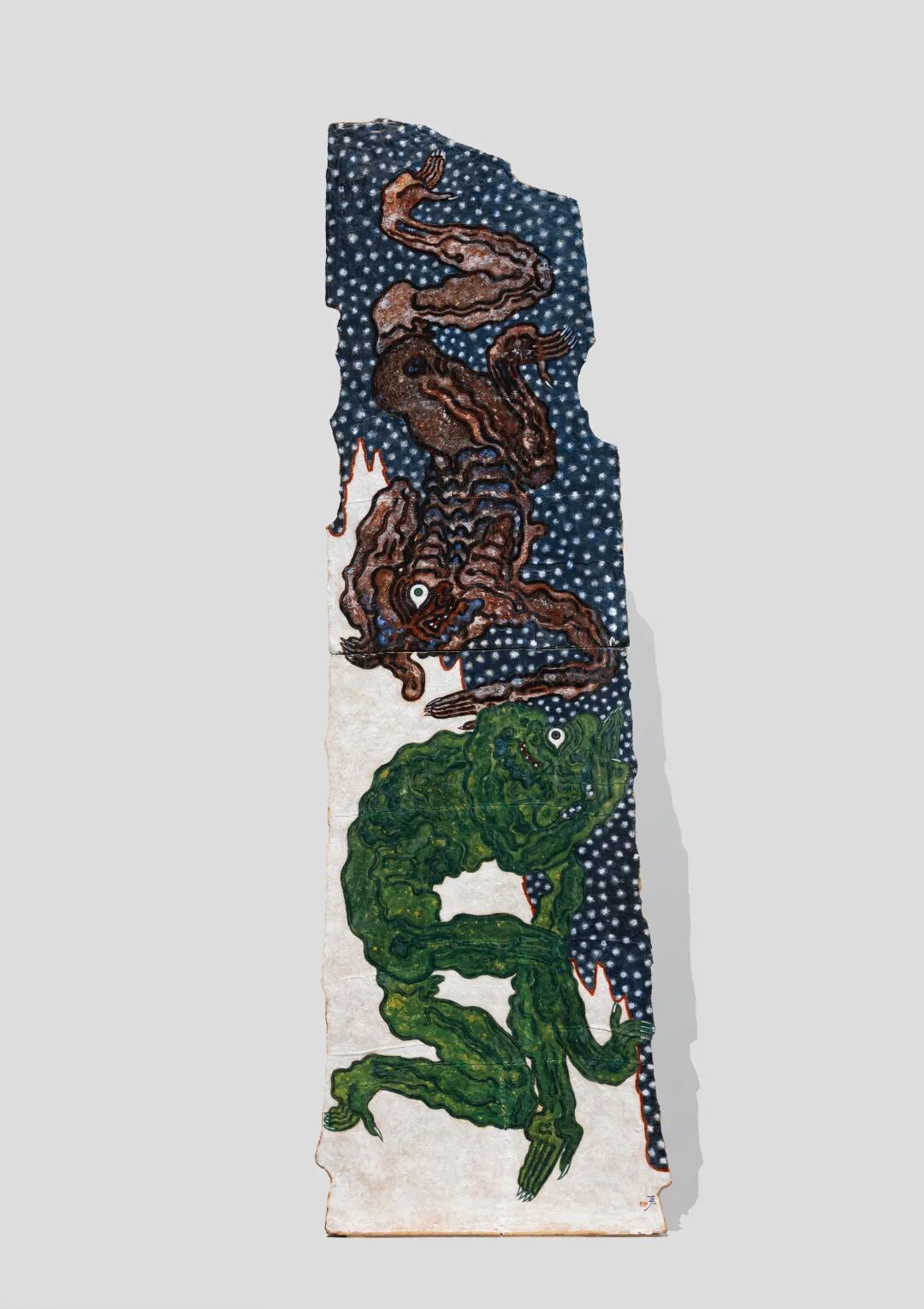
技术语言上,要保持开放心态。既要扎实掌握传统技艺,也要积极学习当代的新技术、新材料、新工艺与烧成方式。学校作为最好的技术平台,没有商业压力,能开展纯粹的材料与工艺研究,并汇聚全球先进技艺。青年艺术家应充分利用这一优势,筑牢技术基础。
Q:如今很多新材料、新技术被引入陶艺创作,你如何看待科技对陶艺发展的影响?
A:新技术、新材料无疑是加分项。比如如今精准控制的柴烧技术,在过去是难以想象的,它们为表达提供了更多可能。但在数字与AI背景下,我们更需思考陶艺的核心方向。AI解决的主要是技术层面问题,即便它能模仿情感、生成作品,甚至替代部分流行陶艺,但人的审美与精神需求会持续演进。就像工业革命后,机器虽取代了大量手工制品,但传统陶瓷并未消亡,反而手工感强的作品成为二十世纪的主流,日本民艺运动也由此兴起。
数字时代,AI无法完成的部分,正是未来陶艺发展的空间,其核心必然是情感、审美与形而上的精神价值。无论科技如何进步,世界永远需要艺术家,因为艺术家提供的是精神的支撑,陶艺家也不例外。
Q:你认为当下陶艺家面临的核心挑战是什么?是艺术观念上的突破,还是精神内核的建构?
A:两者都重要,但归根结底,是“找到自己”。许多艺术家容易被当下的艺术趋势或热门概念裹挟,失去自我。对于渴望代表这个时代的陶艺家而言,既不能简单模仿传统,也不能盲目跟随国外潮流,而要拒绝“麦当劳式”的跟风,做出兼具时代特色与个人风格的作品。
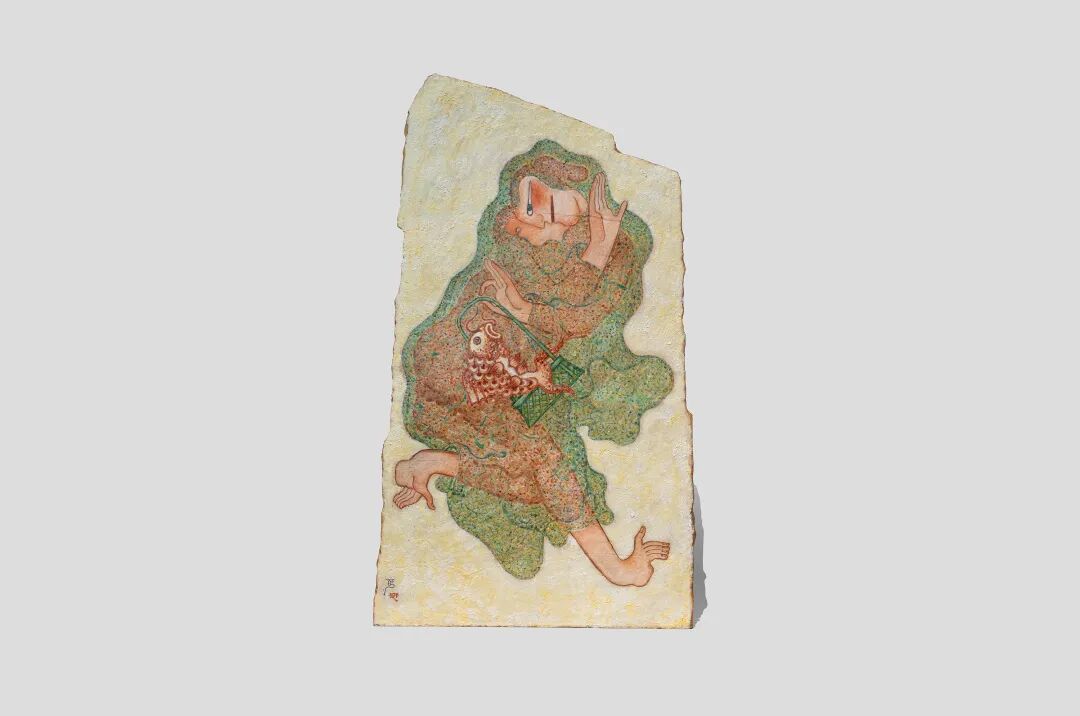
独立创作之路并不容易,会面临生存压力、不被理解等诸多困难,早期作品也可能不成熟、不被认可,但坚持至关重要。对艺术家来说,最大的挑战往往不是技术或观念,而是意志力,即便再难,也要坚守理想,不忘初心。
Q:作为江西籍艺术家和行业推动者,你对即将在景德镇举办的全球陶瓷盛会有何期待?
A:能在景德镇举办这样的世界级盛会,本身就是一件具有历史意义的大事。景德镇作为全球陶瓷文化的重要源头,理应成为世界陶艺的焦点,这次盛会正是它重新走向国际视野的契机。
我期待它能成为世界当代陶艺最新作品、理念与思想的汇聚地,成为中国当代陶艺发展的“发动机”,不仅吸纳国内的优秀成果,更要汇聚全球陶艺的先进思想与技术。只要景德镇能打造好这个核心平台,未来它一定能成为全球陶瓷艺术创作、产品研发、商业运营与文化体验的核心区域。
Q:对于那些还在观望是否参与景德镇双年展的年轻人,你会给予怎样的鼓励?
A:回望历史,今天无疑是陶艺发展的盛世。年轻陶艺家应当以 “双重眼光” 要求自己:一是世界眼光,吸收全球先进的方法与理念,提升创作的标准与格局;二是历史眼光,扎根本土文化脉络,确立创作的根基与身份。
当横向的世界眼光与纵向的历史眼光在创作中交汇,你就能找到属于这个时代的切入点。这是我们这代人,也是每一位年轻陶艺家应当追求的目标。希望大家勇敢参与进来,在双年展中寻找自我,做出真正属于这个时代的作品。
英文版
Exclusive Interview|Liu Zheng: "Finding Yourself "
Interview Notes:
“How can we make our generation’s contribution to the ceramic art of the world?”
This question runs like a hidden thread through Liu Zheng’s 27 years of reflection and practice since he initiated the firstChina Contemporary Young Ceramic Artists Biennalein 1998.
From initially creating a platform for exchange among ceramic artists to becoming a core arena for dialogue between local culture and international perspectives, he has witnessed the growth and transformation of contemporary Chinese ceramics.
From an early stage of uncertainty about how to “create freely” in the face of an immense tradition, to today’s direct engagement with the impact of AI and globalization, these 27 years trace the journey of contemporary Chinese ceramics in search of its own coordinates.
In this conversation, we seek to clarify: in an era of platform overload and information explosion, what exactly is the role of a top-tier biennale? And how should young Chinese ceramic artists find themselves amid the global clamor?
Liu Zheng
Professor and PhD Supervisor, China Academy of Art
Former Deputy Secretary of the Party Committee, China Academy of Art
Vice Director, Ceramic Art Committee, China Artists Association
Recipient of the “Outstanding Contribution Award in Chinese Ceramic Art Education”
Q:Yu Lingna
A:Liu Zheng
Q:How do you see the global position of the Jingdezhen International Ceramic Art Biennale, and what is its core value?
A:It is undoubtedly one of the most important ceramic art biennales in China and even worldwide. It has already exerted significant influence in the field of contemporary Chinese ceramics. Whether for academically trained artists, practitioners from production regions, or ceramic artists of different generations, it provides positive guidance and serves as a highly influential platform for exchange.
Practice has shown that the more international the outlook, the more deeply we must reflect on the unique positioning of contemporary Chinese ceramics. In what form and with what ideas should we contribute our generation’s strength to the development of world ceramics? This is precisely the core goal of the Biennale: to use an international platform to clarify the path forward for contemporary Chinese ceramics, and to encourage ceramic artists to examine and construct their own creative systems within a globalized context.
Compared with internationally renowned ceramic biennales such as Mino in Japan and Gyeonggi Province in Korea, our distinctive feature lies in deeply cultivating local cultural resources and stimulating the creative vitality of contemporary Chinese ceramics. We focus on nurturing young ceramic artists who embody both a Chinese cultural temperament and a contemporary vision. In past juries, even when the panel included many international experts, there was always strong attention paid to the cultural roots and attributes of the works. Through this Biennale, we hope to further excavate and present the profound appeal of Chinese culture, and to systematically cultivate a new generation of ceramic artists who combine Chinese characteristics with international modes of expression.
Q:You initiated the first China Contemporary Young Ceramic Artists Biennale in 1998. What was your original intention, and what new challenges does the Biennale face after 27 years?
A:The creative environment back then was completely different from today. The original intention was actually very simple: to build a platform for artists working with ceramic materials to exhibit and exchange ideas. At that time, ceramics were not included as a category in the National Art Exhibition, and evaluations within the light industry system mainly focused on products from production regions. Artists devoted to creative practice were instead on the margins of the field.
Conditions for the first exhibition were extremely difficult. There was no funding, and participating artists even had to paint the display stands themselves. The exhibition space was borrowed, though fortunately it was designed by Wang Shu, resulting in a striking visual effect. The first two editions were both held there. Faced with China’s profound ceramic tradition, many artists were unwilling to merely imitate and replicate the past; they hoped to create works with a distinct personal style. We also invited artists from across the Taiwan Strait and Hong Kong and Macau to participate. Step by step, we persevered, and to date the Biennale has been held thirteen times.
Today, ceramic exhibitions have proliferated across China—at institutions such as Jingdezhen Ceramic University, the China Academy of Art, Tsinghua University, and in Shandong, among others. In this context, the Biennale must “set out again” and respond to the core questions of our time: how to absorb the positive achievements of global ceramic development, integrate them with local traditions, energize the creativity of young ceramic artists, and encourage them to produce works that possess both local cultural charm and a contemporary spirit.
It must be emphasized that “locality” should not devolve into narrow nationalism, nor should it become a superficial accumulation of symbols. The key lies in a deep understanding of the inner core of Chinese culture, rather than a shallow, “costume-like” presentation. As awareness of this issue deepens, the expressive depth and artistic quality of the works will continue to improve.
Q:As the Biennale is hosted by academic institutions, what unique value and impact does it bring to ceramic art education?
A:The Biennale plays a crucial guiding role in education. We are cultivating the backbone of the field for the next ten, twenty, or even more years. As a platform that combines experimentation with academic rigor, the Biennale introduces cutting-edge ceramic issues into teaching and becomes an important opportunity to explore the future direction of education.
It is not only a gathering place for the works of leading artists, but also a venue for various symposia, making it an ideal site for accessing industry resources and information. More importantly, it allows us to observe in advance potential future trends and challenges in creation, and to encourage young people to boldly explore and experiment with new directions. Such exploration may not always be easily understood in conventional exhibitions, but the Biennale must create space for it.
Q:This edition of the Biennale places special emphasis on supporting young ceramic artists. In your view, what abilities are most strengthened when young people participate in international biennales?
A:They are mainly concentrated in two areas: conceptual thinking and technical language.
In terms of concepts, the first step is to reject “McDonaldized” creation—that is, simply imitating currently popular styles. The second is to engage deeply with local culture, not only Chinese culture, but the broader Eastern cultural system, including traditions and contemporary practices from Japan, Nepal, India, and beyond. These form the foundation of creative vitality.
In terms of technical language, one must maintain an open mindset. On the one hand, it is essential to master traditional techniques solidly; on the other, one should actively learn contemporary technologies, new materials, new processes, and firing methods. Universities provide the best technical platforms: free from commercial pressure, they allow for pure research into materials and processes while bringing together advanced techniques from around the world. Young artists should make full use of this advantage to build a strong technical foundation.
Q:Many new materials and technologies are now being introduced into ceramic creation. How do you view the impact of technology on the development of ceramics?
A:New technologies and materials are undoubtedly a plus. For example, today’s precisely controlled wood-firing techniques were unimaginable in the past, and they offer more possibilities for expression. However, in the context of digitalization and AI, we must think more deeply about the core direction of ceramics. AI mainly addresses technical issues. Even if it can simulate emotion, generate works, or replace certain forms of popular ceramics, human aesthetic and spiritual needs will continue to evolve.
Just as after the Industrial Revolution, machines replaced many handmade products, traditional ceramics did not disappear. On the contrary, works with a strong sense of handcraft became mainstream in the twentieth century, and Japan’s Mingei movement arose from this context.
In the digital age, what AI cannot accomplish is precisely the space for the future development of ceramics. At its core lie emotion, aesthetics, and metaphysical spiritual values. No matter how technology advances, the world will always need artists, because artists provide spiritual support—and ceramic artists are no exception.
Q:What do you see as the core challenge facing ceramic artists today: a breakthrough in artistic concepts, or the construction of a spiritual core?
A:Both are important, but ultimately it comes down to “finding yourself.” Many artists are easily swept along by current trends or fashionable concepts, losing their own voice. For ceramic artists who aspire to represent their era, it is not enough to simply imitate tradition, nor to blindly follow foreign trends. They must reject “McDonaldized” conformity and create works that embody both the spirit of the times and a personal style.
The path of independent creation is not easy. Artists face survival pressures and misunderstanding, and their early works may be immature or unrecognized. But perseverance is crucial. For artists, the greatest challenge is often not technique or concepts, but willpower. No matter how difficult it becomes, they must hold fast to their ideals and remain true to their original aspirations.
Q:As a Jiangxi-born artist and a promoter within the field, what are your expectations for the upcoming global ceramic event to be held in Jingdezhen?
A:To host such a world-class event in Jingdezhen is in itself of great historical significance. As one of the most important sources of global ceramic culture, Jingdezhen deserves to be a focal point for world ceramics. This event represents an opportunity for it to re-enter the international spotlight.
I hope it will become a gathering place for the latest works, ideas, and thinking in contemporary ceramics worldwide, and serve as an “engine” for the development of contemporary Chinese ceramics. It should not only absorb outstanding domestic achievements, but also bring together advanced global ideas and technologies. If Jingdezhen can build this core platform well, it will surely become a global hub for ceramic art creation, product development, commercial operation, and cultural experience in the future.
Q:What encouragement would you give to young people who are still hesitant about participating in the Jingdezhen Biennale?
A:Looking back at history, today is undoubtedly a golden age for the development of ceramics. Young ceramic artists should hold themselves to a “dual perspective”: first, a global perspective—absorbing advanced methods and ideas from around the world to raise the standards and scope of their creation; second, a historical perspective—rooting themselves in local cultural lineages to establish the foundation and identity of their work.
When a horizontal global perspective and a vertical historical perspective converge in creation, you will find an entry point that belongs to this era. This is the goal that our generation—and every young ceramic artist—should strive for. I hope everyone will participate boldly, find themselves through the Biennale, and create works that truly belong to this time.
(责任编辑:刘欢 审稿:兰茜 刘欢)